SwiftUI's Multiline Text Alignment Guide
This article provides insights into mastering text alignment in SwiftUI, offering alignment customization tips for multi-line text

When working with typography in modern iOS applications, handling long paragraphs or sentences that span across multiple lines is a very common scenario. In older frameworks like UIKit, modifying how text wraps and aligns often required juggling several different properties. Fortunately, when using Text views in SwiftUI, managing multi-line text is significantly more streamlined and intuitive.
By default, if a Text view consists of strings that exceed the available screen width, SwiftUI will automatically wrap the text across several lines. The default behavior displays this multi-line text as left-aligned (or leading-aligned). If your app design dictates a different style—such as centering the text for an onboarding screen or aligning it to the right for specific layouts—you need to change this alignment. You can achieve this using a specific modifier called multilineTextAlignment.
Table of Contents
- How to use multilineTextAlignment
- Understanding the Difference: multilineTextAlignment vs Frame Alignment
- Limiting the Number of Lines
- Real-World Use Cases
- Conclusion
How to use multilineTextAlignment
The syntax for this modifier is quite straightforward:
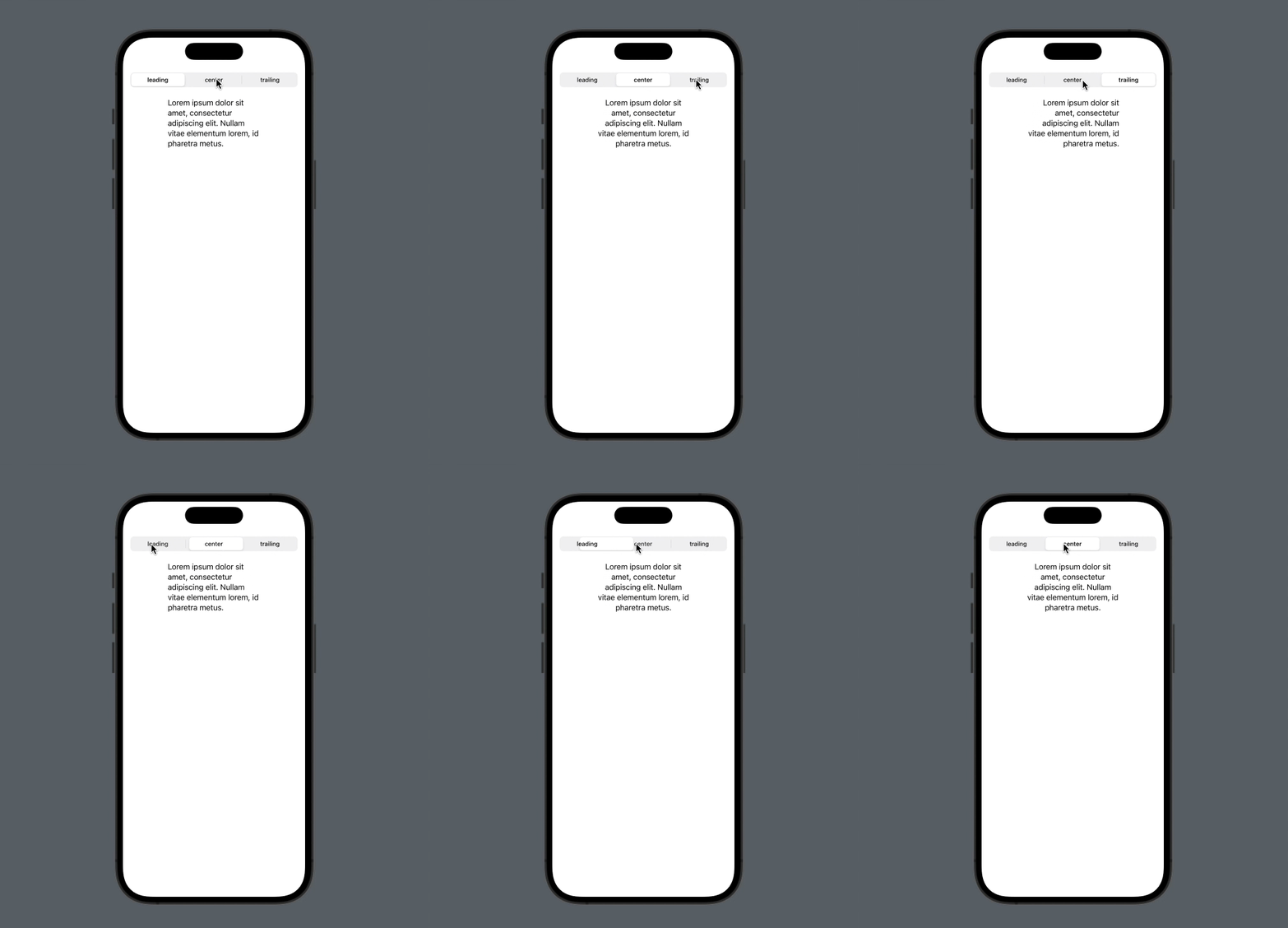
func multilineTextAlignment(_ alignment: TextAlignment) -> some ViewThe values you can pass for TextAlignment include:
.leading(the default, aligns text to the left/start).center(centers all lines of text).trailing(aligns text to the right/end)
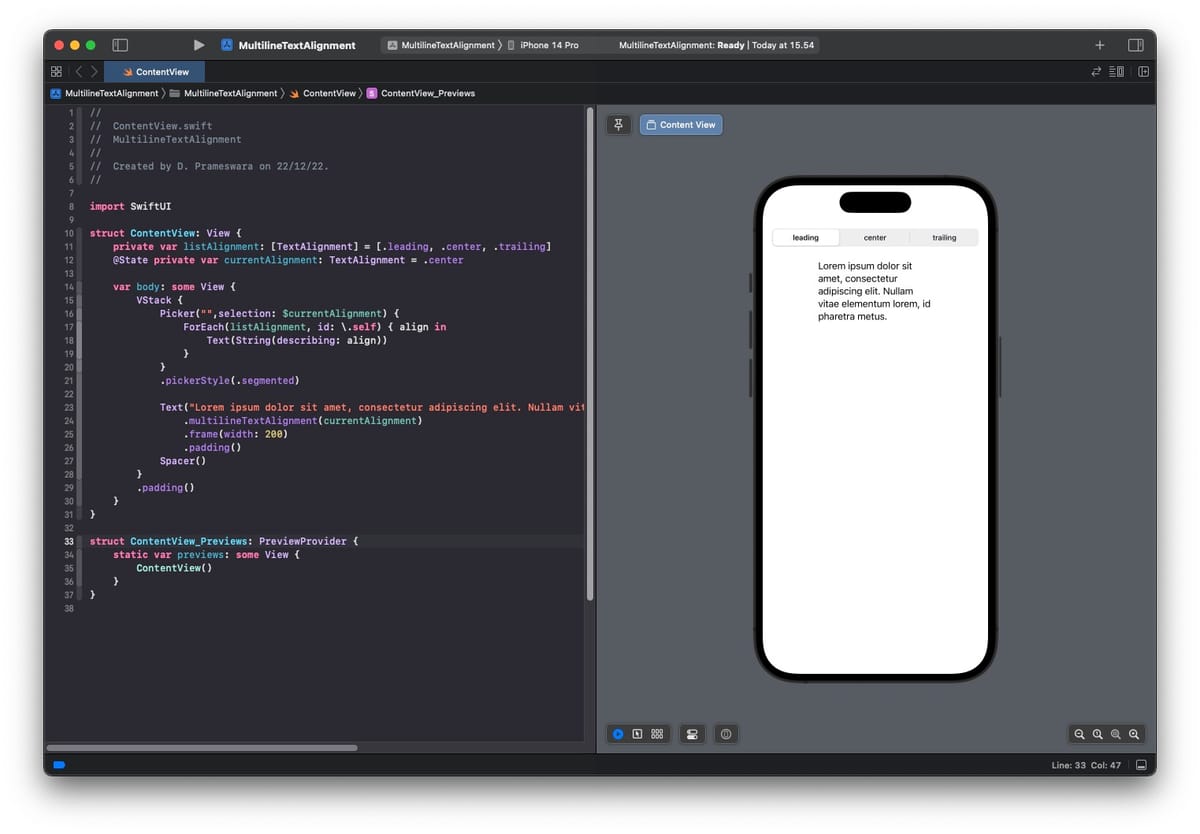
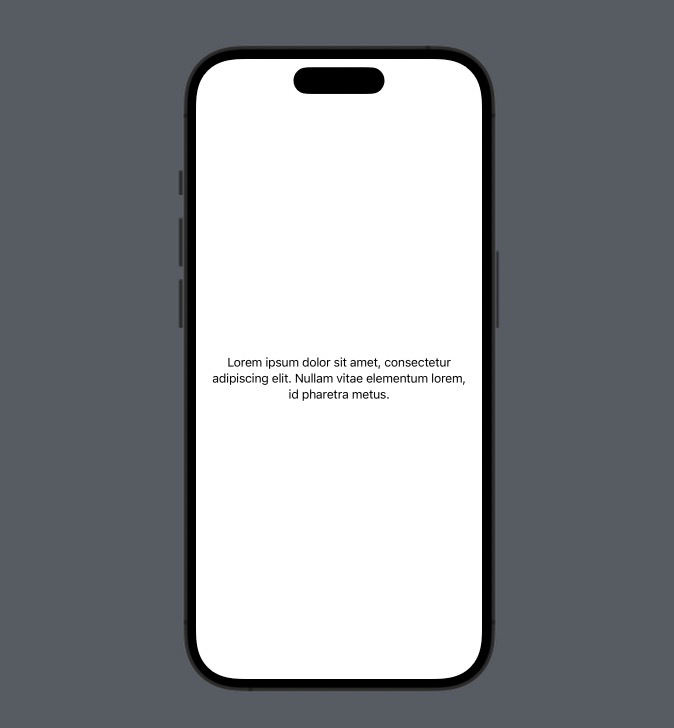
Here's a practical example of how to adjust the text alignment in a Text view spanning multiple lines:
import SwiftUI

struct ContentView: View {
    var body: some View {
        Text("Lorem ipsum dolor sit amet, consectetur adipiscing elit. Nullam vitae elementum lorem, id pharetra metus.")
            .multilineTextAlignment(.center)
            .padding()
    }
}
Understanding the Difference: multilineTextAlignment vs Frame Alignment
One of the most common mistakes beginners make is confusing .multilineTextAlignment(.center) with .frame(alignment: .center).
It is important to remember that .frame(alignment:) places the entire block of the Text view within its parent container, but it does not change how the individual lines of text format themselves inside the text bounding box. If you want the actual sentences to be centered relative to one another within the text block, you must explicitly use .multilineTextAlignment(.center).
Limiting the Number of Lines
Sometimes you don't want the text to grow infinitely downwards. If you want to restrict the maximum number of lines that can be displayed (for example, in a news feed or card UI), you can combine the alignment modifier with the lineLimit modifier.
func lineLimit(_ number: Int?) -> some ViewHere is how you apply it together with the alignment:
import SwiftUI

struct ContentView: View {
    var body: some View {
        Text("Lorem ipsum dolor sit amet, consectetur adipiscing elit. Nullam vitae elementum lorem, id pharetra metus.")
            .multilineTextAlignment(.center)
            .lineLimit(2)
            .padding()
    }
}
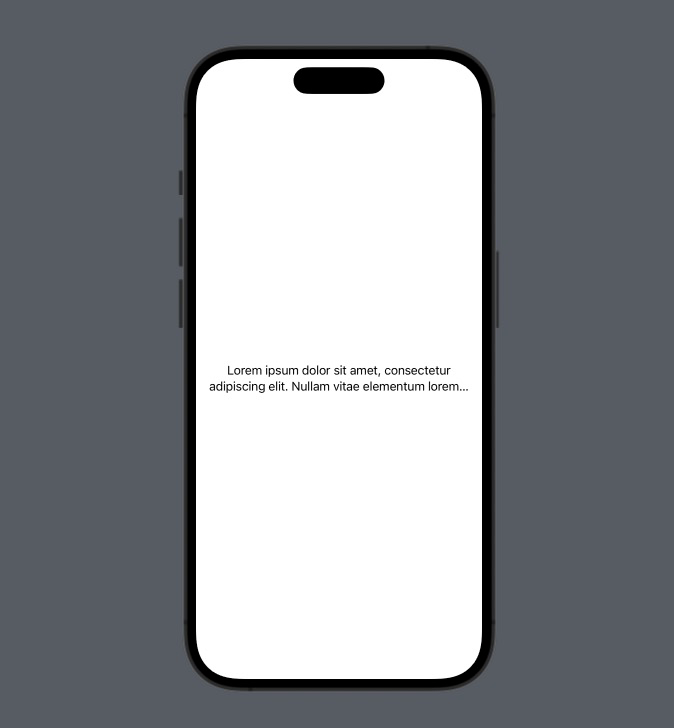
By adding the lineLimit modifier, if the string length exceeds the available two lines, SwiftUI will automatically truncate the ending and display an ellipsis (...). This is extremely helpful for maintaining a clean and consistent layout across your app's user interface.
Real-World Use Cases
- Onboarding Screens: Welcome texts and feature descriptions usually look best when wrapped and centered using
.multilineTextAlignment(.center). - Quotes and Testimonials: Displaying quotes in a card view often utilizes centered or trailing alignments for aesthetic reasons.
- Articles and Body Text: You should stick to the default
.leadingalignment to ensure readability for long forms of text.
Here is a short visual clip of implementing and adjusting the multilineTextAlignment modifier dynamically:
Conclusion
Mastering basic typography modifiers like multilineTextAlignment and lineLimit is essential for creating polished and professional user interfaces in SwiftUI. By understanding the distinction between internal text alignment and external frame alignment, you can avoid common layout frustrations.
That's all for this short but crucial tip. Give it a try, experiment with combining different views, and hopefully, this insight proves to be useful for your next iOS project!